Pelvic Floor
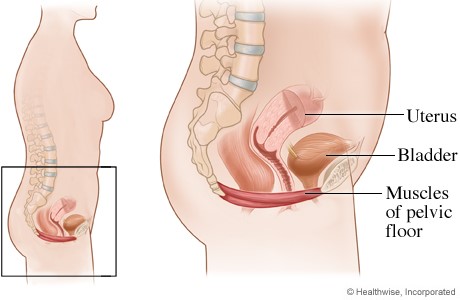
The area of the pelvic floor is in yogic terms the area of the shakti energy. Yogis believe that this is the area of the kundilini energy and yoga can ignite this energy and support this energy to ascend. This area not only has significance for physical support but also supports our generally spiritual wellbeing.
Lets start by looking at Mulabandha the root chakra and area of the pelvic foor. MULA in sanskrit has the meanings of beginning, foundation, root, base, source, origin or cause. Whilst BHANDA in sanskrit means bondage, joining together, catching hold of, fetter. Awareness is essential to complete mind-body connection. This is the energy seal at the base of the body or root lock. An awareness of this area is essential to the mind and body especially in pregnancy.
Pelvic floor muscles are muscles of longevity. It is the layer of sling shaped muscles that support the pelvic organs and span the bottom of the pelvis. The pelvic organs are the bladder and bowel in men and in women it’s the bladder bowel and uterus. The diagram above shows the pelvic organs. Having strong pelvic floor muscles gives us control over the bladder and bowel. Weakened pelvic floor muscles mean the internal organs are not fully supported and you may have difficulty controlling the release of urine, faeces (poo) or flatus (wind). Common causes of a weakened pelvic floor include childbirth, obesity and the associated straining of chronic constipation. Pelvic floor exercises are designed to improve muscle tone and prevent the need for corrective surgery.
The pelvic floor muscles stretch like a muscular trampoline from the tailbone (coccyx) to the pubic bone (front to back) and from one sitting bone to the other sitting bone (side to side). These muscles are normally firm and thick. Imagine the pelvic floor muscles as a round mini-trampoline made of firm muscle. Just like a trampoline, the pelvic floor is able to move down and up. The bladder, uterus and bowel lie on the pelvic floor muscle layer. Diamond shaped perineum – bounded by the
pubic bone (front), tailbone (back) and both sitting bones (ischial tuberosiCes). Primary muscle of importance – pubococcygeus muscle (pc) – runs from pubic bone to coccyx.
The pelvic floor muscle layer has hole for passages to pass through. There are three passages in women (the urethra, vagina and anus). The pelvic floor muscles normally wrap quite firmly around these holes to help keep the passages shut. There is also an extra circular muscle around the anus (the anal sphincter) and around the urethra (the urethral sphincter). Although the pelvic floor is hidden from view, it can be consciously controlled and therefore trained, much like our arm, leg or abdominal muscles.
Pelvic floor muscles provide support to the organs that lie on it. The sphincters give us conscious control over the bladder and bowel so that we can control the release of urine, faeces (poo) and flatus (wind) and allow us to delay emptying until it is convenient. When the pelvic floor muscles are contracted, the internal organs are lifted and the sphincters tighten the openings of the vagina, anus and urethra. Relaxing the pelvic floor allows passage of urine and faeces.
Pelvic floor muscles are also important for sexual function in both men and women. In men, it is important for erectile function and ejaculation. In women, voluntary contractions (squeezing) of the pelvic floor contribute to sexual sensation and arousal. The pelvic floor muscles in women also provide support for the baby during pregnancy and assist in the birthing process. The muscles of the pelvic floor work with the abdominal and back muscles to stabilise and support the spine. Pelvic floor muscles heavily influenced by –emotions, self-image, culture, religion, trauma and prior abuse.
Knowing where they are can help during labour so they can be relaxed. To help prevent the uterus from prolapsing and protect the perineum from tearing during labour it is important to help strengthen it through the use of pelvic exercise. The pelvic floor muscles change through pregnancy, exercise, childbirth, ageing. In women these muscles are important muscles for incontinence, sex life, they prevent organ prolapse, shakti- life force, vitality and vigour, they protects the lumbar spine, supports elimination (apana) and prevents sagging. In men they are important for erectile function, urinary and faecal
incontinence as well as prostate cancer. These muscles are often compromised by the following – heavy labour work, chronic constipation, chronic cough and obesity, low collagen (menopause and Caucasian races), pregnancy and complicated childbirth. Diets high in saturated fat and refined carbohydrates increase inflamm change in the body – increase pf dysfunction of them.
How KalmaMamas helps strengthen Pelvic floor
Firstly it is important for us to understand the health issues women may have with the pelvic floor. 1 in 3 women have issues with incontinence. A normal pattern for going to the toilet is 4-6 times per day and 1-2 times at night. If women start to notice a pattern off to this and or including painful sex and passing less wee painfully these could also be signs of pelvic floor issues.
It is very important to correctly identify the pelvic floor muscles, and you can easily do. You can locate the muscle by stopping your urine flow mid-stream. It is not recommended you do this all the time as can harm the bladder.
There are ways in which you can suggest to test the muscles. what happens to the floor when you cough strongly. Women can use a mirror to check when the central muscles draw up when adopting the squeeze. It should lift rather than bulging out or being slow to respond. The muscles must lift on cough. When we are lifting heavy things and
exercise the muscles need to be engaged.
Always encourage women to engage the muscles before coughing, sneezing and lifting. Adopt a tall posture (cylinder of control needs to be not compromised as the muscles of the pelvic floor may not have as much support to the organs). You can advise of a good diet, this may also help with constipation. Tech them to learn where the pelvic floor muscles are with our techniques below and transversus abdominus connection – these will both RELAX on an inhale and CONTRACT OR RECOIL on an exhale. Adopt an abdominal breathing pattern and relax the abdomen (esp) when releasing the bladder and bowel
The exercises which we do each week will help strengthen the pelvic floor during pregnancy, these should continue after birth. To strengthen your pelvic floor muscles, sit comfortably and squeeze the muscles 10-15 times in a row. Reminding students that the breath, stomach, buttock or thigh muscles shouldn’t be held at the same time. Once students are used to the muscles they can be held for a few seconds during the stretch each week, and then more squeezes can be added. Again advise to the students not to overdo it and always rest between sets of squeezes. See stretches and warm up for more pelvic floor exercises.
Pelvic floor stretches can be done anywhere and very discreetly. Its important to keep the practice up after birth to strengthen the area of the vagina and back passage. It will help incontinence, with sex and treat prolapse. Women should be advised to work at their own pace.
We have a few different pelvic floor exercises, and there are more within the lesson plans too. Always discuss how to locate the muscles first and stress the importance of practicing daily. Teaching this in different ways will help all the Mamas to access this and find a way that makes sense to them. Use the below in reps of ten slow contractions and ten fast.
The hissy lift – Place your hands firmly into your waist. Take a breath in and hiss to feel waist action. take another breath in and this time hiss out to feel what Pelvic Floor does. On the next breath in lift the Pelvic Floor before next hiss out.
Ask yourself does the waist expand? Does the pelvic floor descend? The pelvic floor should naturally lift on the exhale (hiss).
Elevator – Starting from Floor 0, when muscles are relaxed. Squeezing the pelvic floor you move through levels 1, 2 and 3 squeezing a bit more each time to the top. Then the most important part is to reverse this releasing the muscles bit by bit to train them. Repeat this 3 times. Then you can practice squeezing all the way in, bringing the lift to floor 3 before coming down stopping at each floor.
Lacing Up the Trainer – Imagine the muscles of your pelvic floor are the laces on a training shoe. Start off with the laces loose and then pull them to tighten.
Alternating the speed – Doing fast twitches and slow squeezes helps to strengthen different areas of the pelvic floor.