Labor and Birth
During the first stage of labour, the cervix dilates until it reaches 10cm, fully dilated. There are three phases:
- The Latent Phase – longest phase and least painful. The cervix begins to thin, for some mothers this can take weeks, for others just hours. They may experience mild regular or irregular contractions, some mothers don’t even notice them.
- The Active Phase – The beginning of strong and painful contractions, 3-4 minutes apart lasting for up to a minute each. The cervix dilates to 7cm.
- The Transition Phase – Contractions become more painful and intense and as they become more frequent they may feel as if there is no break in between. The cervix dilates fully to 10cm and this last 3cm can take up to an hour. The baby’s head now pushes against the rectum, giving a feeling like an urge to go to the toilet.
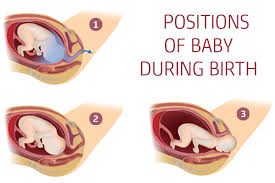
The second stage of labour (also called ‘the pushing stage’) starts when the cervix is fully open (10cm dilated) and ends when baby is born. At this stage, baby is moving from the uterus into the vagina and then out into the world.
A caesarean section is delivering the baby through an incision made through the abdomen and the uterus. Some C-sections are planned but most are carried out in an emergency when there is an issue with birthing the baby vaginally. There are many reasons why a mother may need or opt for a C section including: labour failing to progress, the health of the mother that means a vaginal delivery would not be advised such as heart disease and foetal distress.