Muscular System
Muscles
Muscles have 5 main functions:
- Motion
- Movement of substances in the body
- Posture
- Heat production
- Organ volume regulation
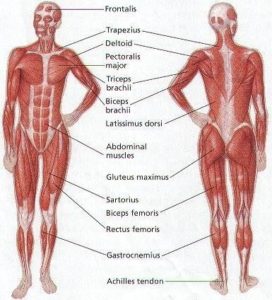
Like adults babies have 3 kinds of muscles:
- Striated muscles (skeletal): the voluntary muscles that operate the movements of the limbs, neck and face. They are all attached to the skeleton. As babies grow, they develop more and more precise control over the actions of these muscles.
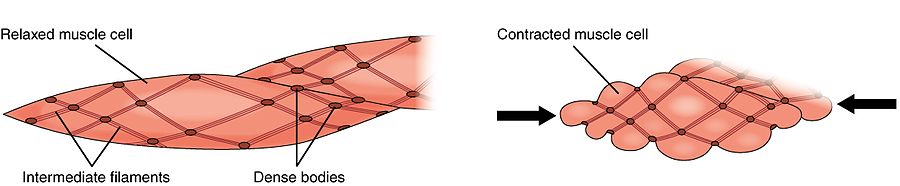
- Smooth muscles: these are involuntary muscles as there is no voluntary control over them and their activities go unnoticed until something is wrong. Smooth muscles control the movement of digested food through the intestines, the circular ones squeezing the gut and the longitudinal ones widening it.
- Cardiac muscles: Cardiac muscles are striped muscles but they are also involuntary. A baby’s cardiac (heart) and respiratory muscles are well developed from birth as they are essential for breathing. Cardiac muscles respond to stimuli that cause babies to respond emotionally, modifying their heartbeat up or down.
All 3 types of muscles can contract actively but can only expand passively. They work in muscle pairs with one muscle forcibly contracting while the other relaxes and allows itself to be stretched. (e.g. if biceps muscles in the arm contact, the arm bends but if triceps contract, the arm straightens itself again: the arm moves through these opposing contractions). Contraction occurs by a sliding filament mechanism.