Birth to 18 Years
Muscle development
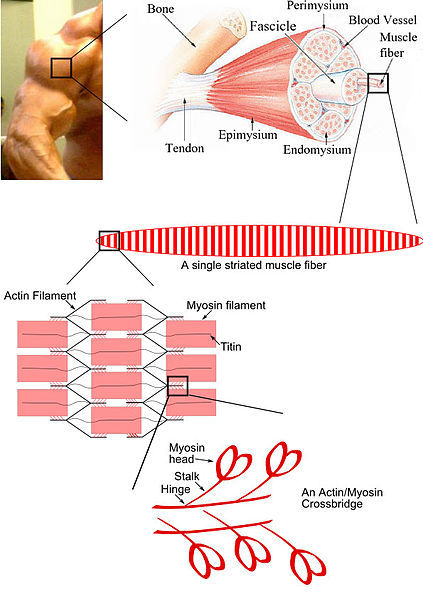 A baby can move quite vigorously at birth and in utero. Although the muscle fibres are almost all present at birth, they are not yet fully developed; the fibres are small and watery and will only develop as the baby grows. The growth is rapid up to eighteen months but the fibres do not increase in number only but also in length and thickness, developing from the head down as with the skeleton. They also increase in size from the inside out.
Early muscle growth is balanced by a normal decrease in adipose tissue in early childhood. The growth and maturation of the muscles continues with the ossification of the skeletal system. Muscle tone is the state of normal tension of the muscles, and term infants normally have strong muscle tone at birth. Less than normal muscle tone is described as hypotonia; rigidity or increased muscle tone is known as hypertonia; and spasticity is resistance to flexion and extension and range of motion of the muscles. Normal muscle function requires the normal function of the lower motor neurons (LMNs) in the spinal cord and the normal reflexivity of the muscle fibers. Normal muscle tone requires the normal function of the spinal cord stretch reflex and the balance of the upper motor neurons (UMNs) and LMN function. Lesions on the UMNs result in increased tone and LMN lesions result in decreased tone.
Development of muscle control:
- Begins with the neck enabling a baby to lift its head.
- By three months they are able to raise the chest and head.
- By six to eight months the baby is usually capable of sitting unsupported for a limited time.
- Development of the leg muscles enables walking and standing around 12-18 months.

Good muscle development requires physical activity, diet and hormonal balance within the body. As a baby becomes more active, the muscle development increases, but initially muscle power is essential for breathing, making the respiratory muscles larger than others muscles in the body.
In early and middle childhood, girls’ muscle size increases at a greater rate than in boys. However, the greatest increase in muscle size occurs during puberty when boys’ muscle mass and muscle cell size begins to exceed that in girls.
Gross and fine motor skills become more refined in the middle childhood stage of development (ages 6-11). Children learn to coordinate their muscle movements through muscle control during activities such as skipping, climbing, and balancing.
Why do we need to know?
Physical activity helps to develop muscle strength and co-ordination, which in turn enables motor development. Working to babies resistance is important to avoid over working the still forming muscles. It is also important to know the different stages of muscle development to ensure we are only using certain stretches on age appropriate babies. For example planks are suitable from 6 months to ensure we aren’t putting pressure on young babies arms before they have reached the appropriate stage of development.