The Science Behind Mindfulness
Research on Mindfulness and the Brain
Recently, a lot of research has been conducted on what effects mindfulness has on the brain. It’s clear that practicing mindfulness can lead to positive outcomes, but many researchers want to know why it works as well.
This is where neuroplasticity comes in.
Explaining Neuroplasticity
Neuroplasticity is, at its most basic level, the ability of the brain to change and adapt over time.
This adaptation happens regularly, as the brain constantly works to make itself more efficient and effective, but neuroplasticity is of specific interest to researchers in the context of brain injuries like a stroke. Our brains can actually reorganize themselves to ensure that functions continue unhindered after a traumatic injury (Honan, 2017).
Whenever we complete a new task or find a more effective way to do something, our brain takes note, often making structural or connection changes to facilitate our next attempt at this task.
When we practice mindfulness, we send the message to our brain that we are more effective at dealing with everyday tasks when we are aware, observant, nonreactive, and nonjudgmental. This causes our brain to make the changes that will improve our ability to function mindfully.
For example, meditation practice has been linked to an increased thickness in the cortex, an area that is important for a general cognitive function like attention and sensory processing (Lazar et al., 2005).
Similarly, long-term meditation is linked with a denser gray matter in the brain stem, an area that is linked to cardiorespiratory control (Vestergaard-Poulsen, van Beek, Skewes, Bjarkam, Stubberup, Bertelsen, & Reopstorff, 2009). This may help explain how mindfulness produces positive outcomes in cardiovascular, as well as general, health.
A study on an 8-week MBSR program showed that the regular practice of mindfulness increased grey matter in the left hippocampus, an area involved in learning and memory (Hölzel, Carmody, Vangel, Congleton, Yerramsetti, Gard, & Lazar, 2011). This finding can help us make sense of the improvements in academic achievement and job performance that can result from mindfulness.
Mindfulness has also been shown to result in changes in white matter, particularly in areas involving brain interconnection and self-regulation (Tang, Lu, Fan, Yang, & Posner, 2012). You’ll recall from above that improved self-regulation is a key result of mindfulness practice, and can lead to a plethora of advantageous outcomes.
In general, mindfulness is known to impact brain systems that control emotion regulation and self-awareness (Paulus, 2016), which makes sense given the outcomes we have seen in the practice of mindfulness.
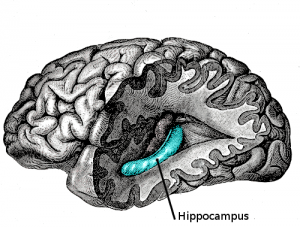
More specifically, one study used functional magnetic resonance imaging (fMRI) to assess changes in the brain after an eight-week mindfulness course. Results showed that the prefrontal cortex, the hippocampus, and other areas experienced heightened activity and connectivity, while the amygdala experienced decreased functional activity and earlier deactivation after exposure to emotionally charged stimuli (Gotink, Meijboom, Vernooji, Smits, & Hunink, 2016).
This means that the areas of the brain associated with higher-level functioning were more active, while the area of the brain that handles stress and strong emotions was less involved. These findings match the behavioral changes we see after a mindfulness program, like better emotion regulation, less reactivity, and even better performance on tasks.
Another study of brain activity related to mindfulness found evidence that mindfulness is associated with areas of the brain related to memory retrieval, decision making, and outward attention, all functions which can help link the bridge between mindfulness and improved mental health and job performance, among other outcomes (Gartenschläger, Schreckenberger, Buccholz, Reiner, Beutel, Adler, & Michal, 2017).
While the science of neuroplasticity in relation to mindfulness is still relatively young (as neuroscience as a whole is relatively young!), these studies and others have provided a solid foundation for continuing research on how mindfulness impacts the brain.
It can be important to share with adults the science behind what we are going to teach them to show that it has a real effect and isn’t something ‘wishy washy’. The following information can be shared as part of your introduction to your session.
Mindfulness has its roots in Buddhism – it is an ancient technique that is becoming more common.
A study was carried out using MRI scans of the brain before and after 8 weeks of mindfulness. They found that the amygdala shrinks, the ‘flight or fight’ primal area that responds to stress. The pre-frontal cortex gets thicker. This is the area that is in charge of higher order functions such as concentration, awareness and decision making.
The connections also change. Connection between amygdala and rest of brain weakens, connection with cortex strengthens. Alters the way you respond to stress. More mindful practice = bigger changes.
Another study looked at pain and they showed that ‘advanced meditators’ (those who have practiced meditation for some time) report significantly less pain. Scans show pain receptors aren’t dulled like taking pain relief. They are slightly more active. They aren’t blocking the experience, they just didn’t engage in the thought process. But even more amazing: the subjects were asked not to meditate. They didn’t have to work up to it. This was a permanent change in the way they processed the experience.
If you are delivering a session to teachers, here is some extra information you could share:
It is so important to teach our children how to live mindfully. But it is important for teachers too!
Teacher Wellbeing Index 2018 by the Education Support Partnership found that 67% of educational professionals describe themselves as stressed. 74% said their inability to switch off and relax was the major contributing factor to a negative work life balance. Practicing the techniques we are going to discuss today could help with this.