Reflexology and Mindfulness
What is Reflexology?
Reflexology is a type of massage that involves applying different amounts of pressure to the feet, hands and ears. It’s based on a theory that these body parts are connected to certain organs and body systems. Reflexologists use maps of these points in the feet, hands, and ears to determine where they should apply pressure. People who practice this technique are called Reflexologists they believe that through touch flows through the body to the are which needs healing . There is a theory Reflexology and Mindfulness sits hand and hand.
- Relaxing and restoring nerve pathway signals to the brain and spinal cord
- Helps to balance hormonal disruption cause by the endocrine system
- Working the Limbic system which supports how we retain information and memories (PTSD and Anxiety)
- Helping to relax and improve digestion in the gut
- Helping to relax our lungs and diaphragm which increases deeper breathing
Combining Mindfulness and Reflexology helps with bringing the awareness of oneself towards the body and out of the head. Reflexology is the application of appropriate pressure to specific points and areas on the feet, hands, or ears. Reflexologists believe that these reflex points correspond to different body organs and systems, and that pressing them creates real benefits for the person’s health.
Where does Reflexology come from?
The Ancient Chinese belief in qi (pronounced “chee”), or “vital energy.” According to this belief, qi flows through each person. When a person feels stressed, their body blocks qi. This can cause an imbalance in the body that leads to illness. Reflexology aims to keep qi flowing through the body, keeping it balanced and disease free.
Zone theory is another belief that some use to explain how reflexology works. This theory holds that the body contains 10 vertical zones. Each zone contains different body parts and corresponds to specific fingers and toes. Practitioners of the zone theory believe that touching these fingers and toes allows them to access every body part in a particular zone.
How does it work?
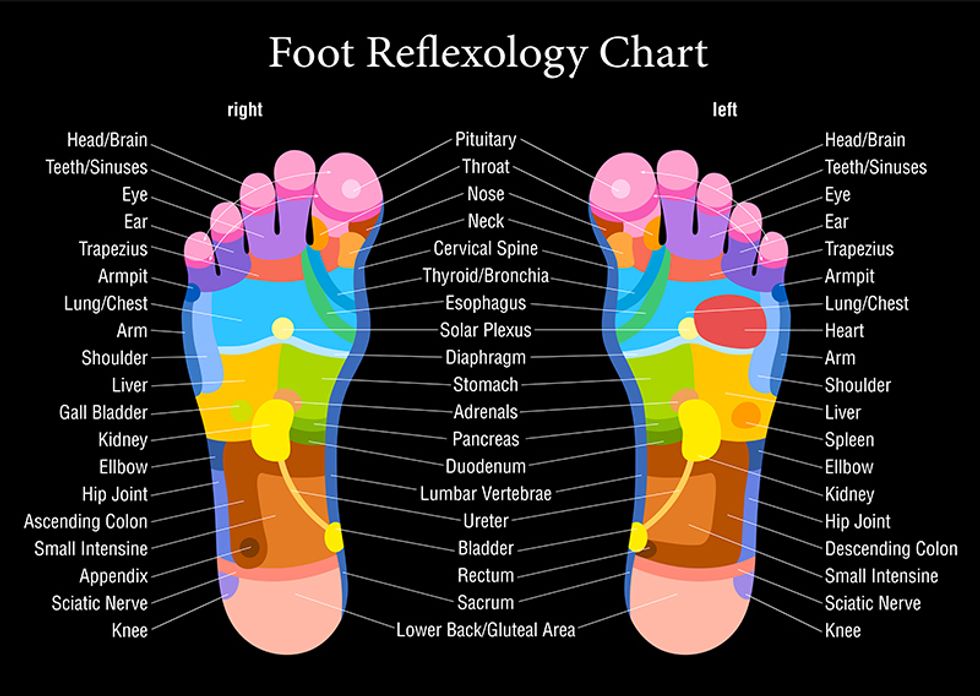
When a reflexologist uses thumbs or fingers to apply appropriate pressure to an area on the hands or feet this area, corresponds to a art in the body. Reflexologists use foot maps to guide their work, such as the reflexology chart shown below. The left foot and hand corresponds to the organs found on the left side of the body and the right foot and hands to the organs on the right side. In our mindful reflexology we will work with the hands-you will be pleased to know!

Reflexology and mindfulness are sometimes used to help manage symptoms associated with anxiety and stress. They can also help lots of other illnesses and ailments such as diabetes, headaches and asthma. The benefits of mindful reflexology include:
- Helps reduce stress
- Reduces anxiety
- reduces depression
- Helps insomnia
- immune function
- General health and wellbeing
What is Mindful Reflexology?
Mindful Reflexology looks at mindfulness as being aware of your body and mind in the present moment and recognising thoughts and feelings as they emerge without being caught up in them and making judgments based upon them. Mindfulness can help people change the way they think and feel about their experiences and not identify themselves by their feelings or mistakes but as who they truly are. The focus is on the just being, and not the just doing.
Combining Mindfulness and Reflexology helps with bringing the awareness of oneself towards the body and out of the head. In Mindful Reflexology we adapt techniques that target key reflexes to enhance mindfulness. These advanced techniques, with are designed to ease stress and promote deep relaxation.
The places we carry stress in the body are:
- Respiratory system – Stress and strong emotions can present with respiratory symptoms, such as shortness of breath and rapid breathing, as the airway between the nose and the lungs constricts.
- Cardiovascular – The heart and blood vessels comprise the two elements of the cardiovascular system that work together in providing nourishment and oxygen to the organs of the body. The activity of these two elements is also coordinated in the body’s response to stress. Acute stress — stress that is momentary or short-term such as meeting deadlines, being stuck in traffic or suddenly slamming on the brakes to avoid an accident — causes an increase in heart rate and stronger contractions of the heart muscle, with the stress hormones — adrenaline, noradrenaline and cortisol — acting as messengers for these effects. In addition, the blood vessels that direct blood to the large muscles and the heart dilate, thereby increasing the amount of blood pumped to these parts of the body and elevating blood pressure. This is also known as the fight or flight response. Once the acute stress episode has passed, the body returns to its normal state.Chronic stress, or a constant stress experienced over a prolonged period of time, can contribute to long-term problems for heart and blood vessels. The consistent and ongoing increase in heart rate, and the elevated levels of stress hormones and of blood pressure, can take a toll on the body. This long-term ongoing stress can increase the risk for hypertension, heart attack or stroke.
- Musculoskeletal skeletal – When the body is stressed, muscles tense up. Muscle tension is almost a reflex reaction to stress — the body’s way of guarding against injury and pain. Constant stress with cause them to become in a guarded like state. When muscles are taut and tense for long periods of time, this may trigger other reactions of the body and even promote stress-related disorders. For example, both tension-type headache and migraine headache are associated with chronic muscle tension in the area of the shoulders, neck and head. Musculoskeletal pain in the low back and upper extremities has also been linked to stress, especially job stress
- Endocrine – When someone perceives a situation to be challenging, threatening or uncontrollable, the brain initiates a cascade of events involving the hypothalamic-pituitary-adrenal (HPA) axis, which is the primary driver of the endocrine stress response. This ultimately results in an increase in the production of steroid hormones called glucocorticoids, which include cortisol, often referred to as the “stress hormone”.
- Gastrointestinal – The gut has hundreds of millions of neurons which can function fairly independently and are in constant communication with the brain- explaining the ability to feel “butterflies” in the stomach. Stress can affect this brain-gut communication, and may trigger pain, bloating and other gut discomfort to be felt more easily. The gut is also inhabited by millions of bacteria which can influence its health and the brain’s health which can impact the ability to think and affect emotions. Stress is associated with changes in gut bacteria which in turn can influence mood.
- Nervous system – The nervous system has several divisions: the central division involving the brain and spinal cord and the peripheral division consisting of the autonomic and somatic nervous systems. The autonomic nervous system has a direct role in physical response to stress and is divided into the sympathetic nervous system (SNS), and the parasympathetic nervous system (PNS). When the body is stressed, the SNS contributes to what is known as the “fight or flight” response. The body shifts its energy resources toward fighting off a life threat, or fleeing from an enemy. The SNS signals the adrenal glands to release hormones called adrenalin (epinephrine) and cortisol. These hormones, together with direct actions of autonomic nerves, cause the heart to beat faster, respiration rate to increase , blood vessels in the arms and legs to dilate, digestive process to change and glucose levels (sugar energy) in the bloodstream to increase to deal with the emergency.
-The SNS response is fairly sudden in order to prepare the body to respond to an emergency situation or acute stress, short term stressors. Once the crisis is over, the body usually returns to the pre-emergency, unstressed state. This recovery is facilitated by the PNS, which generally has opposing effects to the SNS. But PNS over-activity can also contribute to stress reactions, for example, by promoting bronchoconstriction (e.g., in asthma) or exaggerated vasodilation and compromised blood circulation. Both the SNS and the PNS have powerful interactions with the immune system, which can also modulate stress reactions. The central nervous system is particularly important in triggering stress-responses, as it regulates the autonomic nervous system and plays a central role in interpreting contexts as potentially threatening.
-Chronic stress, experiencing stressors over a prolonged period of time, can result in a long-term drain on the body. As the autonomic nervous system continues to trigger physical reactions, it causes a wear-and-tear on the body. It’s not so much what chronic stress does to the nervous system, but what continuous activation of the nervous system does to other bodily systems that become problematic.
- Reproductive system – Sexual desire, reproduction, Menstruation, pregnancy
Safety with Reflexology
Reflexology is generally a safe practice however if anyone with the following is in the session it should be avoided until medical advice has been sought:
- circulatory problems
- Pregnant-no reflexology at all as it can induce labour
- inflammation or blood clots in your legs
- gout
- thyroid issues
- epilepsy
- Low platelet count
- diarrhea
- bacterial or fungal skin infections
- open wounds
- hand inflammation
- fever or any infectious disease
Reflexology Techniques to help:
For sessions we will be working with audiences hand. The idea being they are able to conduct the massage on their own hands. In general a deep pressure is thought to stimulate a reflex point and bring about a physical change. Gentle pressure works more with the subtle energy’s. When using the techniques below you must decide if the audience needs stimulated or calmed this determines the pressure. For example the adrenal reflex where you may feel pain, may need stimulation to help produce the bodies natural pain killers. Whilst stressed out audiences may need this reflex calming to help calm the release of adrenaline.


Anxiety relief apply pressure to the Heart 7 (HT7) point. It’s found just below the crease of your wrist on your outer hand. You should feel a little dent here. Massage this area for one minute on both hands.
Digestive relief which includes constipation. Find your Large Intestine 4 (LI4) pressure point. It’s located between your thumb and index finger. Use your fingertips to apply pressure to this fleshy webbing on your right hand for one minute. Repeat on your left hand. Many people find that this pressure point is a good target for general pain relief as well.
Chest area Where we tend to hold emotions and can hold anxiety as well as the above try massaging the area on the side of the hand just below the bottom of the little finger. Help to release tensions held in the chest and improve your mood.
Hand points relating to Chakras
